The useful part first
Key takeaways
- Ask which fixtures are affected before approving the work, because a shared-line problem and a single fixture clog call for different next steps.
- Mechanical rodding can clear many common obstructions, but it does not repair cracked, offset, or collapsed pipe.
- A useful written finding should say what was cleared, where the blockage appeared, and whether the line ran freely afterward.
- If the backup seems tied to rainwater or sump discharge, mention that specifically because storm and sanitary systems are separate in DeKalb.
A main sewer problem is different from a slow sink or one stubborn toilet, so the first conversation should focus on which fixtures are affected and whether wastewater is still moving at all. If wastewater is backing up, pause water use and do not run fixtures to recreate the problem. That keeps the situation from getting worse while the issue is assessed.
DeKalb stormwater and sanitary sewer matters are handled separately by local agencies, so it helps to describe the symptom carefully instead of assuming every backup has the same cause. The city notes that storm sewer questions are handled by the City of DeKalb, while sanitary sewer questions go to the Kishwaukee Water Reclamation District. If you want to understand how a referral works before you book, see how referrals are handled.
Rodding, snaking, and similar mechanical cleaning are best when the line is obstructed rather than broken. The useful question is not just whether the line can be opened, but what the contractor can confirm after it opens. A good visit should leave you with a plain explanation of access used, blockage material, and any limits that were encountered.
What general sewer rodding is meant to do
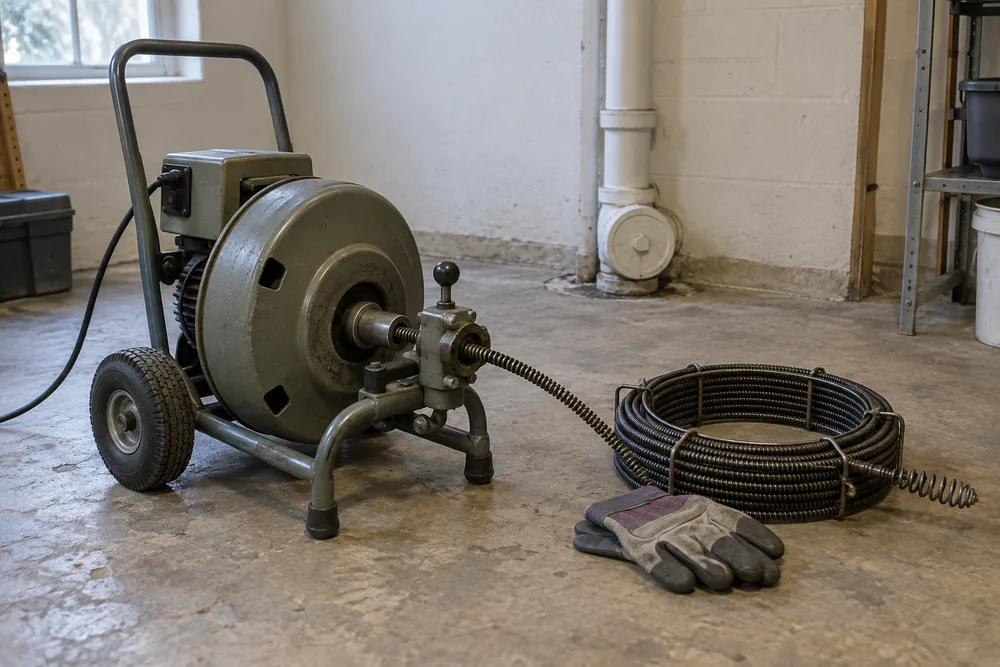
General sewer rodding is the work of running mechanical cable through a sewer line to break up or pull back an obstruction. It is commonly used when the blockage is soft, compacted, or lodged in a way that a cable can reach. That might include paper buildup, sludge, or small intrusions that can be torn loose enough for flow to return.
It is a clearing method, not a full system diagnosis by itself. If the line opens and stays open, that may be all a homeowner needs that day. If the line opens only briefly, or the cable stops at the same point more than once, the contractor should explain what that suggests instead of leaving the issue vague.
A practical referral conversation should cover the entrance point, whether there is a cleanout, and what the visible symptoms are inside the house. That lets the contractor decide whether rodding is the right first step or whether another service, such as camera inspection, is better for confirming the condition of the pipe.
- Main line rodding aims at the shared sewer line, not just one sink or toilet.
- It is useful when the line is blocked but still accessible.
- It can relieve flow and reveal whether a deeper condition needs follow-up.
- It should end with a clear explanation of what was removed or loosened.
What a useful result looks like
A useful result sounds concrete. For example, the contractor might say the line was opened from an existing cleanout, the obstruction was heavy paper and buildup, and water drained freely after the run. That is more helpful than a vague statement that the sewer was 'cleaned out.'
The written note should match the work actually performed. If only mechanical cable was used, it should say that. If a camera was also run, the note should identify that separately so you can tell what was observed and what was only inferred.
Questions to ask before you approve the work
Before anyone starts, ask what led them to recommend rodding instead of another approach. A good answer will usually tie the recommendation to your symptoms, access points, and whether the problem seems isolated to one fixture or shared across the house. If you have several slow drains at once, you may also want to review multiple drain symptoms before you decide.
Ask exactly where they expect to enter the line. A contractor should be able to tell you whether the work will use an existing cleanout, another accessible opening, or a different access point. That matters because access affects both the work and the clarity of the findings.
You should also ask what happens if the cable stops at the same spot, or if the line clears but backs up again soon after. The answer should not be a sales pitch. It should explain whether further evidence is needed, such as inspection, root removal, or another method that is better suited to the condition.
- What symptom led you to recommend rodding here?
- Where will you enter the line?
- What will the written finding include?
- What happens if the blockage returns quickly?
Questions about limits, not just benefits
Rodding can be the right starting point, but it has limits. It does not tell you whether the pipe has a sag, break, or offset unless the contractor can observe something through the opening or follow up with a scope. It also may not fully remove hard scale, heavy grease layers, or deeper structural restrictions.
Ask what the method can and cannot prove in your situation. That keeps the conversation focused on the actual line condition instead of on a generic promise that any blockage can be solved the same way.
Water backing up now?
Pause water use and call. Emergency calls are accepted 24/7.
What the equipment can clear, and where it falls short
Mechanical sewer cleaning works best on obstructions that can be cut through, loosened, or pulled back. It is often a solid choice for buildup that has narrowed the line but not permanently changed the pipe shape. When the problem is roots, repeated blockage, or a line that seems to narrow at one point every time, the contractor may need more information before saying the pipe is simply clean.
A cable can restore flow without proving the pipe is healthy. That distinction matters. A line can drain today and still have damage, a recurring intrusion point, or a condition that will bring the problem back. If the contractor thinks that is possible, the written note should say so plainly.
If the obstruction appears to be root-related, a more specific service may be needed after clearing. If the line seems to have structural damage, a camera inspection can help show whether the issue is a blockage alone or something more. If you want the technical comparison, rodding and jetting are explained in more detail on the guide page.
- Good for soft buildup and many common obstructions.
- Less useful for damage, offsets, or repeated failures at the same spot.
- Does not by itself repair pipe defects.
- A clean run after service does not always mean the pipe is problem-free.
Why a camera can matter after cleaning
A camera is helpful when the line opens but the symptoms suggest the blockage may come back. It can show whether the pipe has a repeat pinch point, visible root intrusion, standing water, or a section that deserves more attention. It is not required in every case, but it is often the next useful question when the clearing result is incomplete or uncertain.
If you are comparing next steps, ask for the least amount of work that still explains the problem. That can keep you from paying for a second visit when the first visit should have left a clearer answer.
Why local drainage details matter in DeKalb
DeKalb’s own guidance separates storm sewer issues from sanitary sewer issues. That matters because rainwater on the surface and wastewater from the home do not belong to the same system. If you are seeing water near a basement drain during wet weather, the contractor should know whether the symptom lines up with rain, a sump discharge, or a sanitary backup. The City’s sump pump assistance information also notes that improper sump, roof, or foundation drainage connections can add rainwater to sanitary sewers.
Do not assume every wet-weather problem means the same repair. A sanitary line blocked by buildup is handled differently from stormwater drainage trouble, and the right answer starts with the symptom pattern. If you suspect the issue is broader than a private line cleaning, backup symptoms after rain is a better place to sort out the pattern.
That distinction is especially important if water appears in a basement floor drain, laundry area, or lower-level fixture when it rains. Those clues can point in different directions, and the contractor’s job is to tell you which facts support the recommendation rather than to blur the difference.
- Stormwater and sanitary sewer issues are separate in DeKalb.
- Improper sump or drainage connections can add rainwater to sanitary sewers.
- Rain timing is useful information, not a conclusion by itself.
- A good referral starts with the symptom pattern, not a guess.
One concrete example
For example, suppose a basement floor drain starts acting up during a steady rain, while upstairs fixtures seem normal. That pattern is different from a backup that shows up after heavy toilet use on a dry day. The first conversation should mention the rain connection, because that may change whether the contractor suggests rodding, inspection, or a more careful look at where water is entering the system.
What a useful written finding should include
A useful written finding should be short but specific. It should say what access point was used, what the contractor found, what was removed or loosened, and whether flow improved after the work. If a camera was not used, that should not be hidden. The note should stay honest about what was actually observed.
Look for language that separates observation from assumption. For example, 'line cleared at cleanout' is an observation. 'Likely root intrusion' is a conclusion that should be supported by what the contractor saw, not by guesswork. When the note is clear, it becomes much easier to decide whether to schedule an inspection, root-focused service, or no follow-up at all.
If the contractor recommends another step, the note should say why. That might be because the line was slow to clear, because a repeat obstruction appeared, or because the pipe condition could not be confirmed from the access used. A written finding that shows those limits is more useful than a general statement that the sewer was serviced.
- Access point used
- What was cleared or removed
- Whether flow improved
- Any observed limitation or follow-up reason
Why precision helps later
If the same line acts up again, a detailed note gives the next contractor a head start. It can also help you compare whether the problem is repeating in the same area or changing over time. That is especially useful when you are deciding between another cleaning and a closer look with a camera.
When rodding may not be enough
Sometimes the best outcome from rodding is not a perfect cure but a clearer direction. If the line clears and then clogs again soon after, or if the cable repeatedly stops at the same point, there may be more going on than a simple blockage. In that case, a contractor may suggest further evaluation instead of the same cleaning on repeat.
Repeated backups deserve a better answer than another guess. A camera inspection can be helpful after cleaning because it may show a section that narrows, offsets, or collects debris. If the issue appears rooted in an obstruction source rather than a line shape problem, a different service may be more appropriate.
If you want the booking conversation to stay organized, start with the symptom, then ask what the contractor expects to learn from rodding that a different method would not show. That keeps the decision grounded in the line itself rather than in a one-size-fits-all approach.
- Recurrent clogging at the same spot
- Cable stops at a consistent distance
- Flow improves only briefly
- Written findings mention an unresolved concern
Choosing the next step after a partial result
A partial result is still useful if it leads to a clearer next step. A contractor might say the line is open but needs inspection because of an unclear obstruction point, or that roots were present and a follow-up is needed to see how much pipe exposure remains. The key is not to force a second service immediately, but to understand what the first service did and did not establish.
Rodding questions checklist
| Question | What a solid answer sounds like | Why it matters |
|---|---|---|
| Which fixtures are affected? | The contractor ties the symptom to one fixture or the shared line. | Helps separate a local drain problem from a main line issue. |
| Where will you access the line? | They name the cleanout or other entry point. | Tells you how the work will be done and what it can show. |
| What will the note say afterward? | It will list access, blockage, and result. | Gives you a record you can actually use later. |
| What if the clog returns? | They explain whether inspection or another step may be needed. | Prevents repeat guesswork on the same line. |
Questions homeowners ask
Is sewer rodding the same as drain cleaning?
It overlaps with drain cleaning, but sewer rodding is aimed at the main sewer line rather than a sink, tub, or toilet branch. The difference matters because the shared line can affect more than one fixture at once.
When should I stop using water at home?
If wastewater is coming back up through a drain or toilet, stop using water and do not run fixtures to test it again. Running more water can make the backup worse and can spread the problem to other low fixtures.
Will rodding solve a problem caused by roots?
It can open the line and remove some root material, but it does not repair the place where roots are getting in. If roots are suspected, ask what the contractor saw and whether follow-up inspection makes sense.
Do I need a camera inspection every time?
No. If the line clears cleanly and the symptom is gone, a camera may not be necessary. It becomes more useful when the clog repeats, the blockage point seems fixed, or the contractor cannot confirm the pipe condition from cleaning alone.
What should I tell the referral team before the visit?
Say which fixtures are affected, whether the problem is constant or only during rain, and whether you have a cleanout or previous sewer work history. Those details help match the contractor to the situation before anyone arrives.
Local resources
Use these official resources for municipal or utility information. They are separate from Plumbers 911.